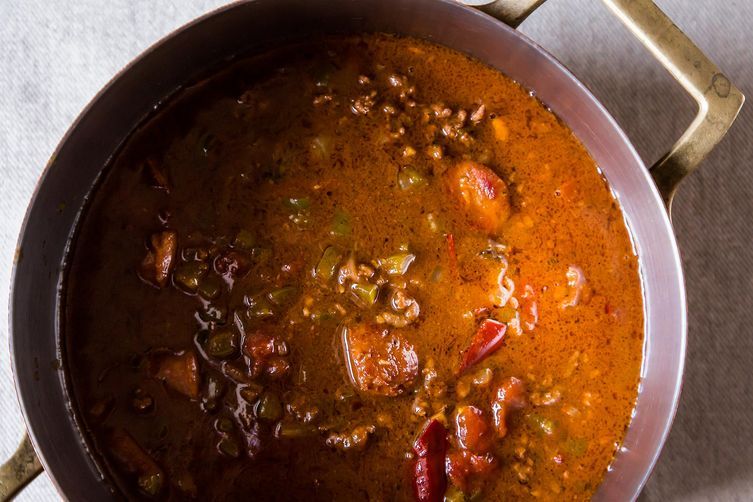
Gumbo is not the invention of any one people — it is the delicious record of their meeting. In the kitchens of colonial Louisiana, West African, French, and Native American foodways collided, mingled, and simmered down into something entirely new. To eat gumbo is to taste that history in every spoonful.
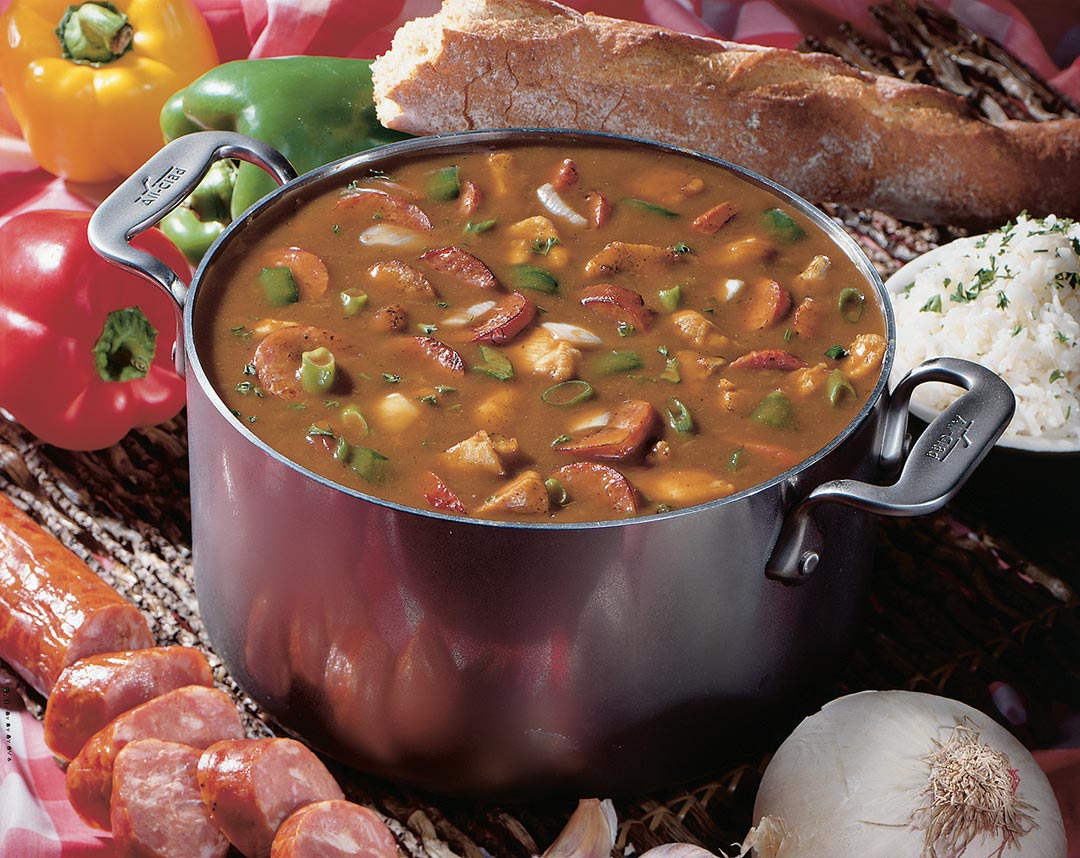
Photo via Southern Cast Iron
The Three Roots
Most food historians agree gumbo grew from three foundational contributions, each from a different culture that shaped early Louisiana.
West African Okra
The word "gumbo" itself is widely traced to a West African word for okra — an early thickener brought by enslaved Africans.
French Roux
The French contributed the roux — though Louisiana cooks took it far darker than any classic French kitchen ever would.
Choctaw Filé
The Choctaw people contributed filé — ground, dried sassafras leaves used to thicken and flavor the pot.
A Dish on the Record
Gumbo enters the documentary record in the early nineteenth century. It is said to have appeared at a gubernatorial reception in New Orleans in 1803, and at a Cajun gathering in 1804 — proof that by then, the dish was already woven into both the city's high society and the rural prairie tables of the Acadians.
- 1700s West African, French, and Native American foodways converge in colonial Louisiana; okra, roux, and filé all enter the regional kitchen.
- 1803 Gumbo is reportedly served at a gubernatorial reception in New Orleans.
- 1804 A Cajun gathering features gumbo — evidence of its spread to rural Acadian communities.
- 1800s → Distinct Creole (city) and Cajun (country) styles take shape and are passed down through generations.
Creole vs. Cajun
Creole gumbo, associated with New Orleans and southeastern Louisiana, often includes seafood, tomatoes, and a lighter roux — the cooking of a cosmopolitan port city. Cajun gumbo, born in the southwestern prairies, leans on a darker, nuttier roux and hearty meats or poultry like chicken and andouille. Both are "right." Both are gumbo. The difference is geography, history, and whatever was in the pantry.
Today, every family keeps its own recipe like an heirloom. The roux may be blond or black, the protein shrimp or sausage, the thickener okra or filé — but the spirit is always the same: take what you have, take your time, and feed everyone at the table.